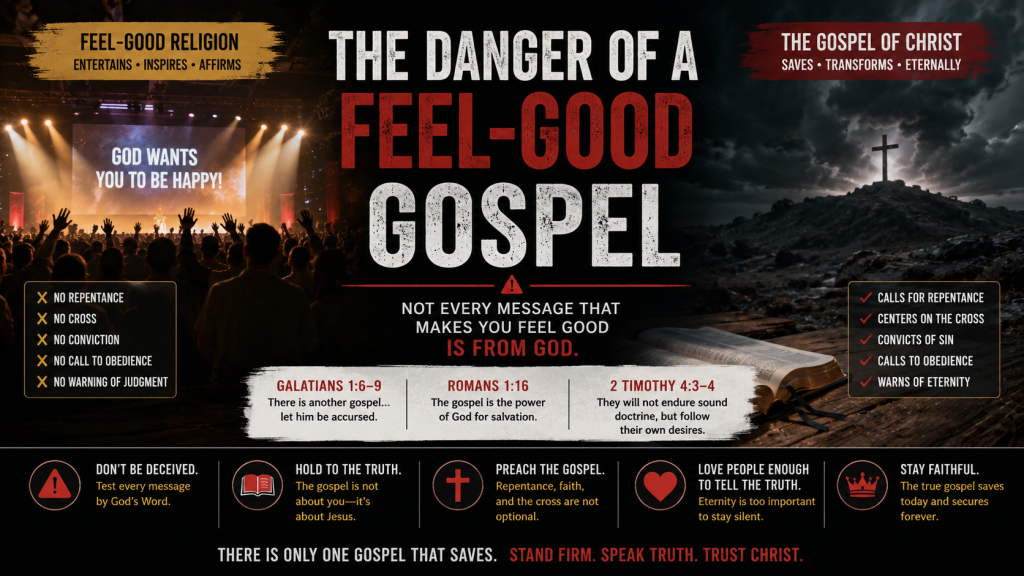
A message can sound kind and still be deadly. It can make people smile, feel encouraged, and leave church with positive thoughts, yet never confront the one thing that will destroy the soul: sin. That is the danger of a feel-good gospel. It comforts people without calling them to repentance. It inspires them without pointing them to the cross. It talks about a better life, but not eternal life in Jesus Christ.
The true gospel is not motivational religion. It is not a self-help message with Bible verses added to it. The gospel declares that man is a sinner before God, that Christ died for our sins, that He was buried, and that He rose again. It calls sinners to stop trusting themselves and trust Christ alone.
Paul warned the Galatians about turning to another gospel. In Galatians 1:6–9, he said he was amazed they were deserting Him who called them by grace for a different gospel. Then he said that even if an angel preached another gospel, he was to be accursed. That is serious language because the gospel is not ours to edit.
A feel-good gospel removes what offends people. It avoids sin, repentance, judgment, holiness, and the need for the new birth. It may mention Jesus, but often only as a helper for personal success, not as the Savior who shed His blood for sinners.
That kind of message cannot save.
Romans 1:16 says, “For I am not ashamed of the gospel, for it is the power of God for salvation.” The power is not in clever words, emotional music, positive slogans, or a preacher’s personality. The power is in the gospel of Christ.
People do not need a message that tells them they are fine. They need the truth. They need to know they are lost without Christ, but that Christ saves completely. They need grace, but grace must never be separated from truth.
Paul also warned in 2 Timothy 4:3–4 that a time would come when people would not endure sound doctrine, but would gather teachers who tell them what they want to hear. That time is not hard to recognize. Many want comfort without conviction. They want heaven without repentance. They want religion that approves them, not truth that changes them.
But love does not hide the truth. A doctor who refuses to name the disease is not kind. A preacher who refuses to warn sinners is not faithful. A church that trades doctrine for applause is not helping anyone.
The true gospel may wound pride, but it heals the soul. It exposes sin, but it points to the Savior. It warns of judgment, but it offers mercy. It says man is guilty, but Christ is mighty to save.
Do not settle for a message that only makes you feel better. You need the message that can make you new.
The feel-good gospel says, “You are enough.”
The true gospel says, “Christ is enough.”
Believe the gospel of Christ. Turn from false hope. Trust the Savior who died, rose again, and alone has power to save.